
'India's sizeable foreign exchange reserves should serve as a buffer.'
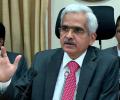
While efforts are being mounted on a war footing to arrest its spread, COVID-19 will impact economic activity in India directly through domestic lockdown. The second-round effects, it said, would operate through a severe slowdown in global trade and growth.
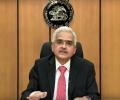
The RBI on Friday said it will give banks Rs 1 trillion through targeted long-term repo operations (TLTROs), of up to three-year maturity, to deploy in "investment-grade corporate bonds, commercial paper, and non-convertible debentures over and above the outstanding level of their investments in these bonds as of March 27, 2020."
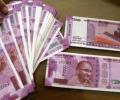
To ease pressure due to the coronavirus lockdown, corporate have asked banks and the government for a six-month liquidity line, so that they can pay off their suppliers and employees.
The volume in the anonymous trading platform, NDS-OM, was Rs 7,210 crore - less than half the normal volume, but not as bad as the start of the day indicated.
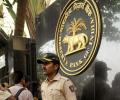
The idea is to keep the RBI's information technology (IT) infrastructure in top shape to run the payments and settlement system uninterrupted 24x7, and run the full gamut of RBI functions from the secured data centres, as nearly 14,000 RBI staffers, except the senior-most management, work from home.

Minutes of the MPC meeting show Das felt economy needs more monetary stimulus as inflation outlook remains uncertain.

Nominating Das, the Banker magazine, which announced the award, said India's banks have faced a series of challenges, from non-performing loans to issues around fraud. Faced with these challenges, Shaktikanta Das has taken steps to bring banking in India up to standard via a restrained approach to governance.
Such minutes will be available within two weeks from the date of its confirmation in the next meeting of the central board and on being signed by the chairman in the same meeting, the RBI said in a statement on its website.
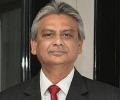
Patra, as executive director of the central bank, was the principal advisor to the Monetary Policy Department since July 2012.

Uttam Prakash Agarwal alleged that Citax and Braich offers were incomplete and did not include firm commitment as to the price, size, timings, confirmation from the banks about availability of the funds.
This comes against the backdrop of instances of indicative ratings given by agencies, for which there are no written agreements.

The bi-annual financial stability report noted that failure of an NBFC with the maximum capacity to cause solvency losses to the banking system will lead to a loss of 2.5 per cent of the total tier-I capital of the banking system.

Thanks to the recapitalisation by the government and measures taken by the central bank, collapse of any large housing finance company won't pose as big a risk as it had six months ago.

In the worst-case scenario, it will be next to impossible for tech companies like Amazon and Google to run any service that requires user biometrics.

RTGS is used to transfer large sums, the minimum amount being Rs 2 lakh. This mode is used primarily to facilitate trade and market transactions. The primary beneficiary would be the capital markets.

If the Personal Data Protection Bill gets passed in its present form, a new class of companies and entities could emerge. The sole job of these new entities would be to manage the consent for data usage of a user.Banks, healthcare firms and fintech companies, among others, fear that sharing non-personal data with the government may hurt business interests. Banks also fear the threat of data misuse.

Backed by technology banks are expanding the branch network - and adding more to the workforce.

A film-maker has accused Citi India of 'picking up' his idea for their latest ad. But the bank denies this vehemently and has threatened legal action.
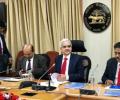
'Overall, domestic demand has moderated significantly. 'The weakening of private consumption, which for long has been the bedrock of aggregate demand, in particular, is a matter of concern,' RBI Governor Shaktikanta Das said in the MPC meetings, in October.
 © 2026 Rediff.com - Advertise with us - Disclaimer - Privacy Policy - Sitemap - Feedback - About us - Terms of use - Grievances